
This is J:COM Safety and Security Division supervised by the Japanese Red Cross Society
In collaboration with the Japanese Red Cross Society, we are developing multifaceted initiatives to raise awareness of disaster prevention.
Under the supervision of the Japanese Red Cross Society, we produce and distribute a series of disaster prevention videos that make it easy to learn about everything from daily preparations to actions to take when a disaster occurs, providing an environment where everyone can easily access disaster prevention knowledge.
Furthermore, we endorse and support the "Red Cross Disaster Prevention Seminar" initiative conducted by the Japanese Red Cross Society, and we collaborate on planning and implementing events that are linked to video-based initiatives.
We will create opportunities for people to view disaster prevention as a personal matter, through both information dissemination and experiential learning.
Production and distribution of disaster prevention video series
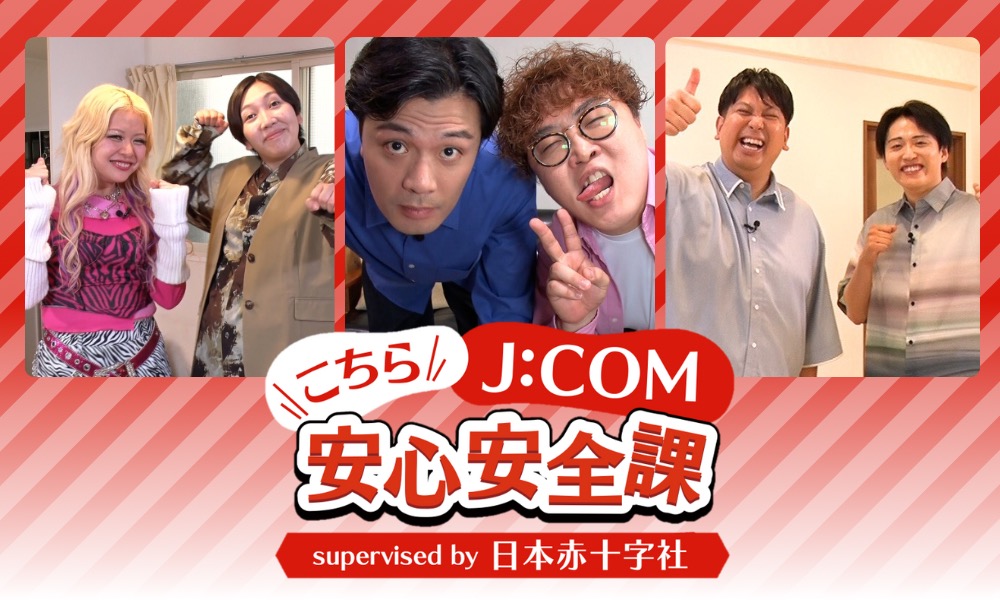
"This is J:COM Safety and Security Division As a special edition of "Disaster Preparedness," we are releasing a video series featuring the three groups Elf, Mayurika, and Rainbow, in which viewers can learn basic knowledge about disaster prevention.
Under the supervision of the Japanese Red Cross Society, we will provide you with a 3-minute summary of knowledge to protect your life from disasters, including daily disaster preparations, what to do when a disaster occurs, precautions to take when evacuating, and how to prepare yourself for a disaster.
Promotional Video
(This is a PR video supervised by J:COM Safety and Security Divisionand run time: 0:30)
#1 Introduction
(This is J:COM Safety and Security Division supervised by the Japanese Red Cross Society "#1 Introduction"Play time: 3:00)
#2 Self-help and mutual help
(This is J:COM Safety and Security Division supervised by the Japanese Red Cross Society "#2 Self-help and Mutual Aid"Play time: 3:00)
#3 Hazard Map
(This is J:COM Safety and Security Division supervised by the Japanese Red Cross Society "#3 Hazard Map"Play time: 3:00)
#4 Dangers in the city and safety checks
(This is J:COM Safety and Security Division supervised by the Japanese Red Cross Society "#4 Dangers in the City/Safety Checks"Play time: 3:00)
#5 Daily Stockpiling
(This is J:COM Safety and Security Division supervised by the Japanese Red Cross Society "#5 Daily Stockpiling"Play time: 3:00)
#6 Stockpiling Items
(This is J:COM Safety and Security Division supervised by the Japanese Red Cross Society "#6 Stockpiling Items"Play time: 3:00)
#7 Emergency Supplies
(This is J:COM Safety and Security Division supervised by the Japanese Red Cross Society "#7 Emergency Supplies"Play time: 3:00)
#8 Ensuring safety during earthquakes
(This is J:COM Safety and Security Division supervised by the Japanese Red Cross Society "#8 Ensuring Safety During Earthquakes"Play time: 3:00)
#9 Create a safe space
(This is J:COM Safety and Security Division supervised by the Japanese Red Cross Society "#9 Ensuring a Safe Space"Play time: 3:00)
#10 In case of fire
(This is J:COM Safety and Security Division supervised by the Japanese Red Cross Society "#10 In Case of a Fire"Play time: 3:00)
#11 Characteristics of Tsunamis
(This is J:COM Safety and Security Division supervised by the Japanese Red Cross Society "#11 Characteristics of Tsunamis"Play time: 3:00)
#12 Tsunami Evacuation
(This is J:COM Safety and Security Division supervised by the Japanese Red Cross Society "#12 Tsunami Evacuation"Play time: 3:00)
#13 Evacuation from heavy rain
(This is J:COM Safety and Security Division supervised by the Japanese Red Cross Society "#13 Evacuation during heavy rain"Play time: 3:00)
#14 Evacuating from your home
(This is J:COM Safety and Security Division supervised by the Japanese Red Cross Society "#14 Evacuation from Home"Play time: 3:00)
#15 What is a shelter?
(This is J:COM Safety and Security Division supervised by the Japanese Red Cross Society "#15 What is an evacuation shelter?"Play time: 3:00)
#16 What you need at an evacuation shelter
(This is J:COM Safety and Security Division supervised by the Japanese Red Cross Society "#16 Things you need at an evacuation shelter"Play time: 3:00)
#17 Normalcy Bias
(This is J:COM Safety and Security Division supervised by the Japanese Red Cross Society "#17 Normalcy Bias"Play time: 3:00)
Support for organizing and promoting disaster prevention seminars
Japanese Red Cross Society Support for the promotion of Red Cross Disaster Prevention Seminars
J:COM supports the Red Cross Disaster Prevention Seminar initiative and makes donations to the Red Cross's "Community Development through Improving Disaster Prevention Capabilities" activities.
This seminar is a program that allows participants to concretely imagine the damage that could be expected if a disaster were to occur in their town, the challenges of evacuation life, and other issues, while learning various ways to protect lives in a community-based setting.
Going forward, through collaboration with the Japanese Red Cross Society, we will carry out activities aimed at raising people's awareness of disaster prevention by disseminating the Japanese Red Cross Society's knowledge of disaster prevention and mitigation more widely.
For more information about the Red Cross Disaster Prevention Seminar, click here
Disaster prevention seminar event held by "This is J:COM Safety and Security Division supervised by the Japanese Red Cross Society"
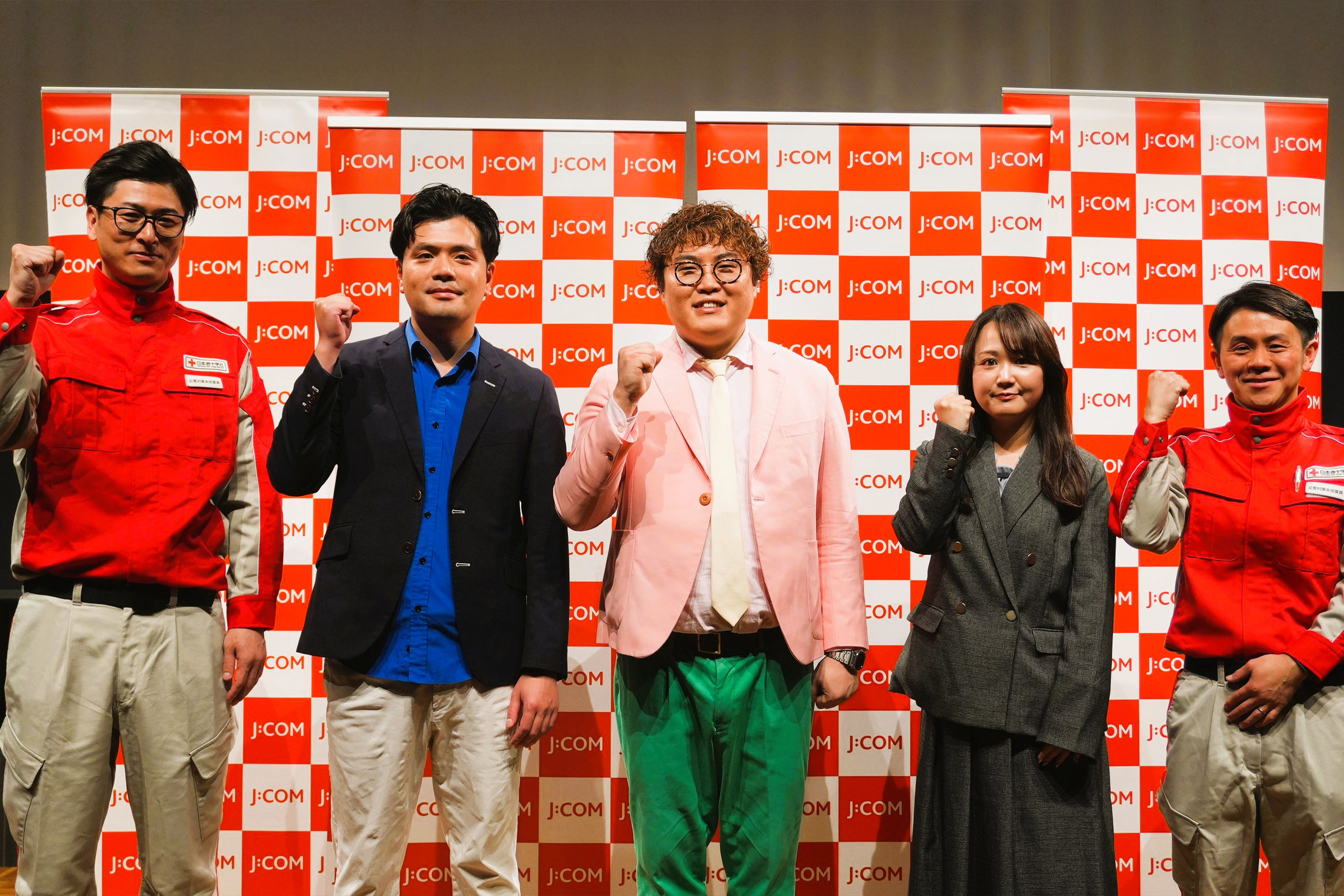
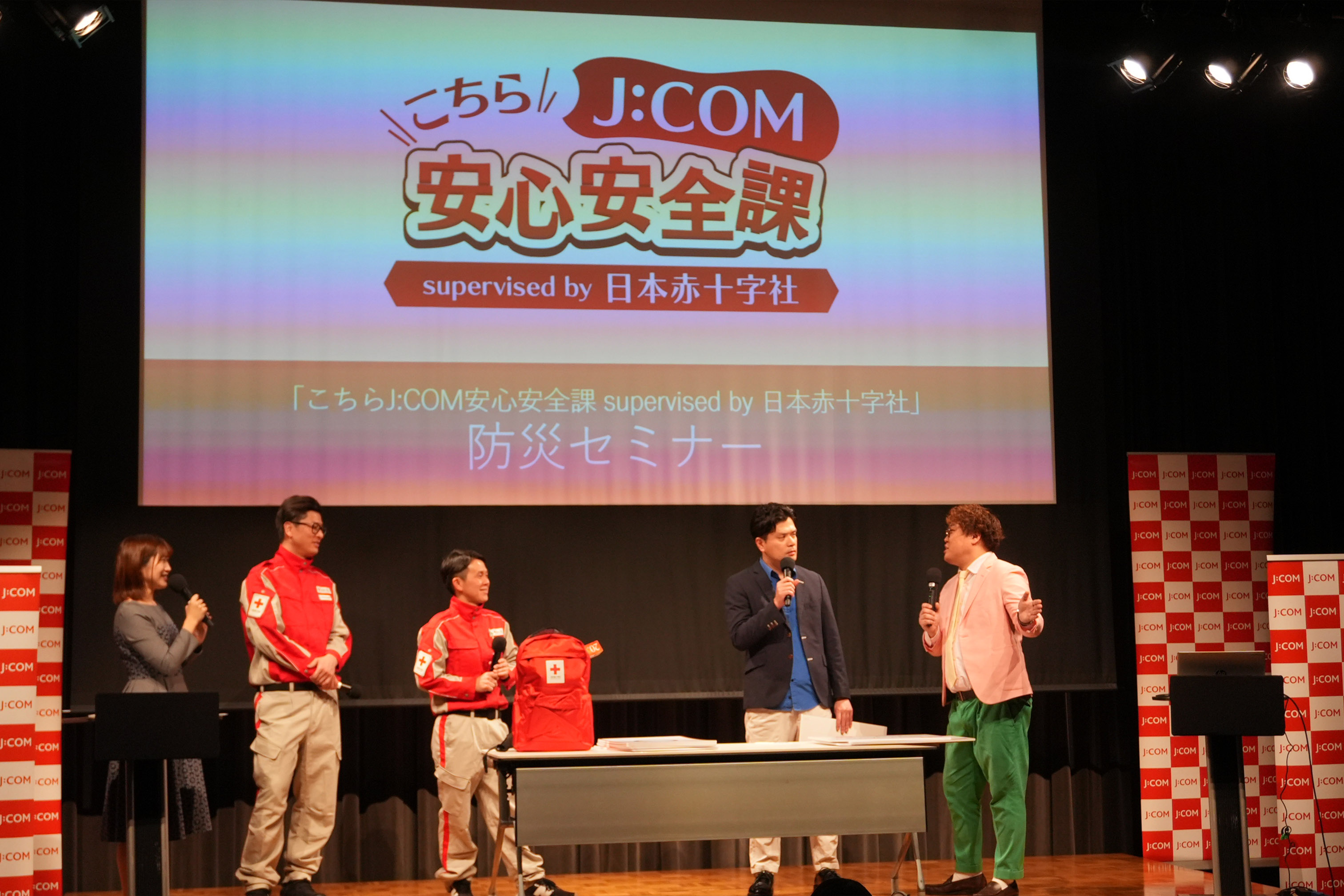
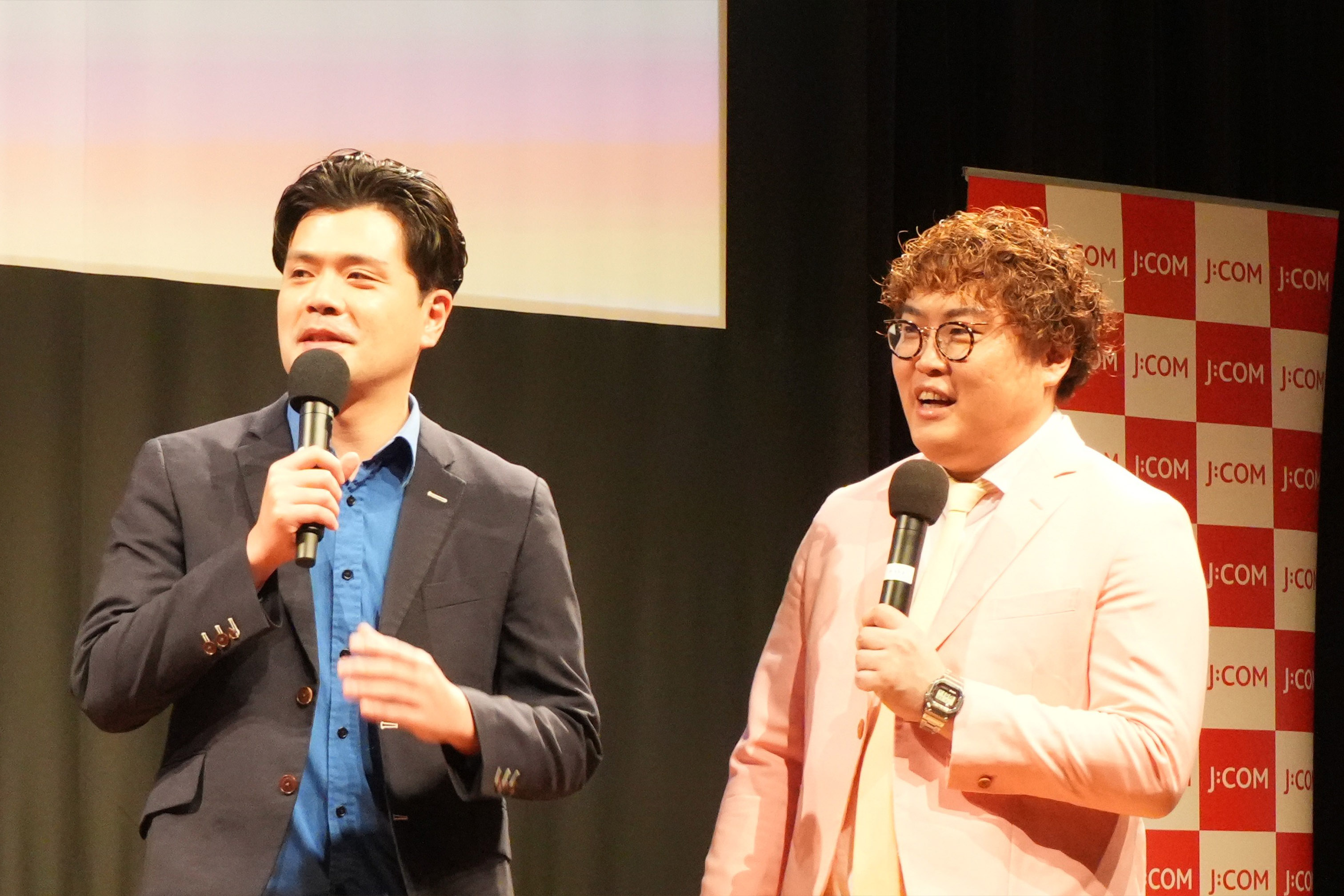
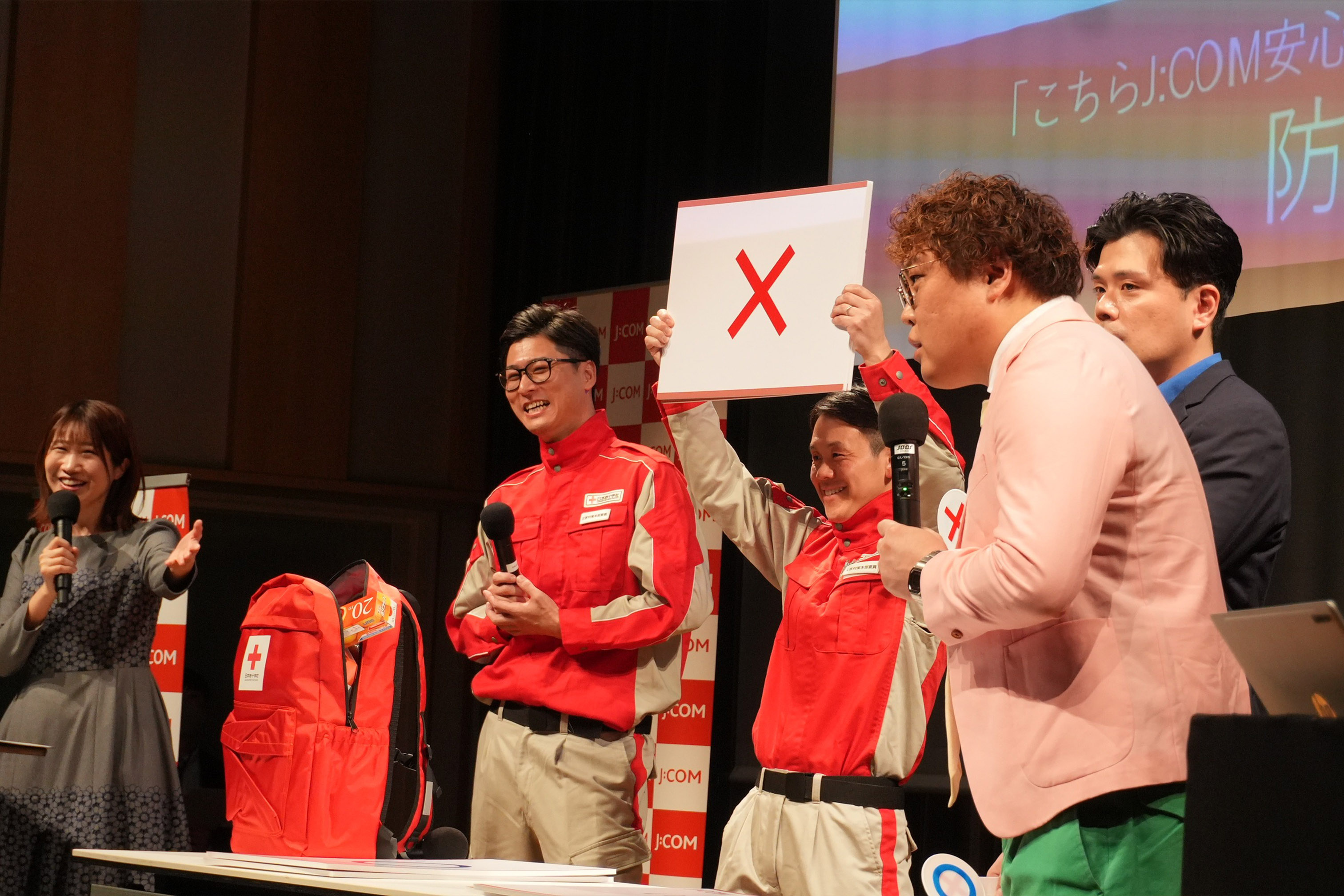
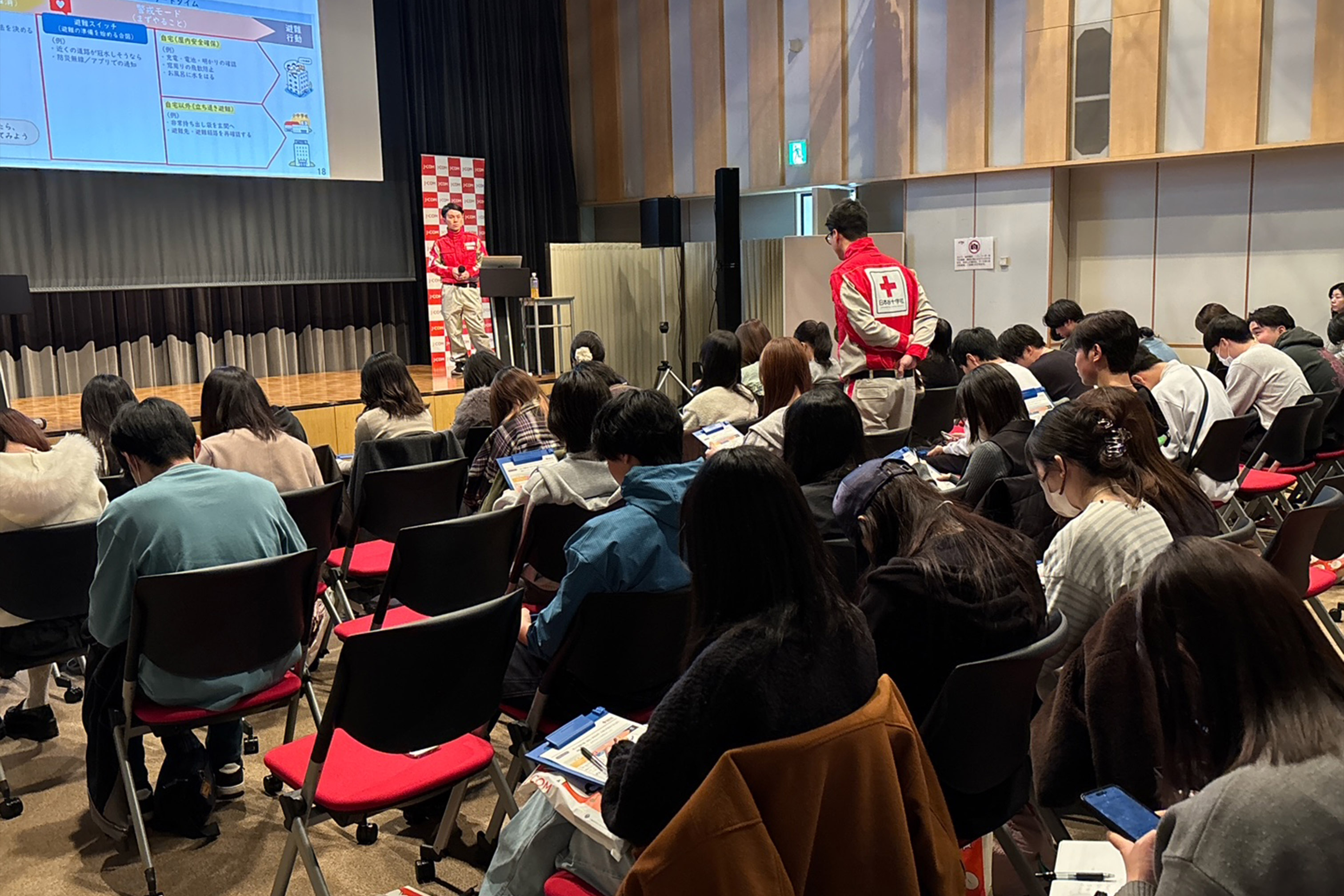
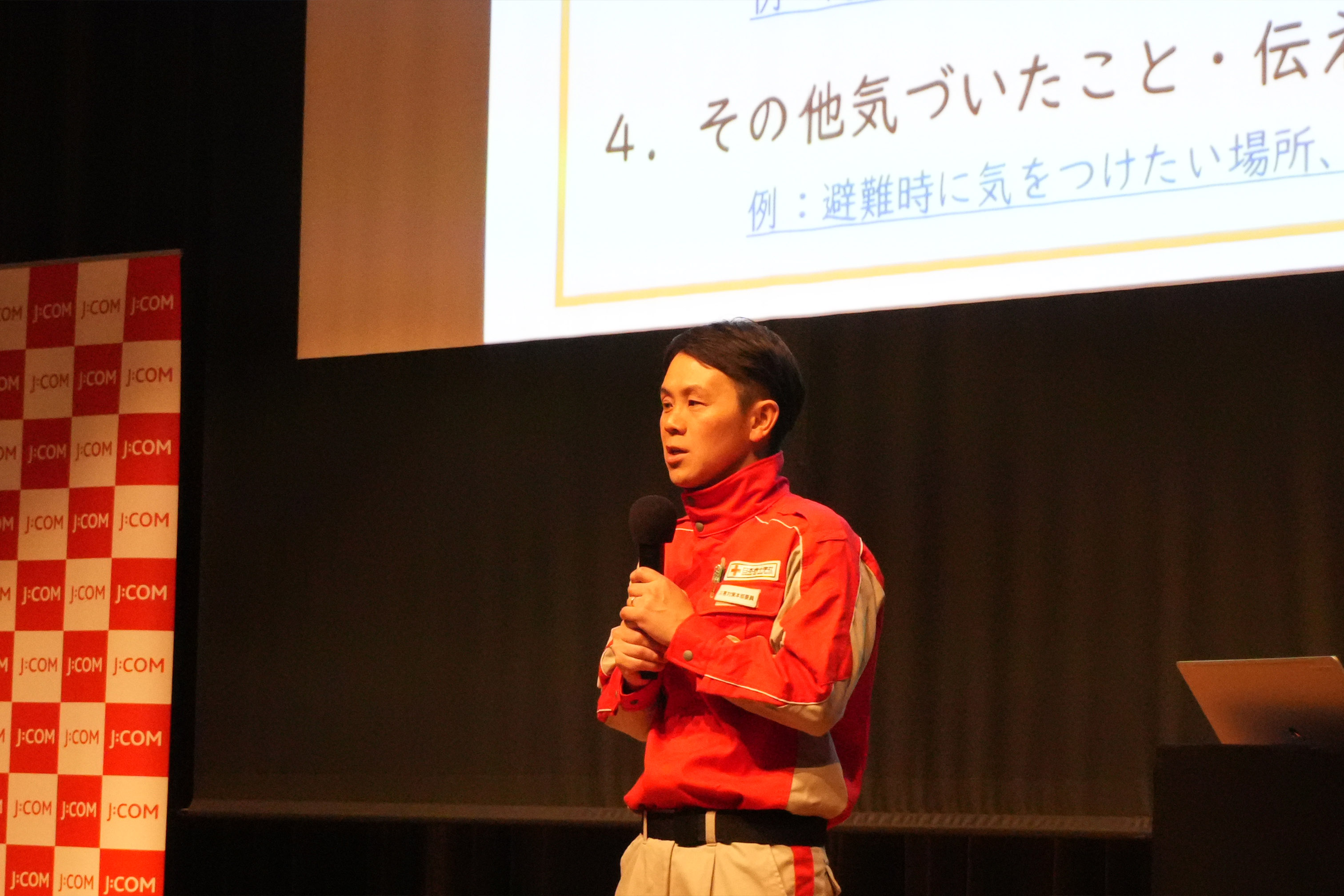
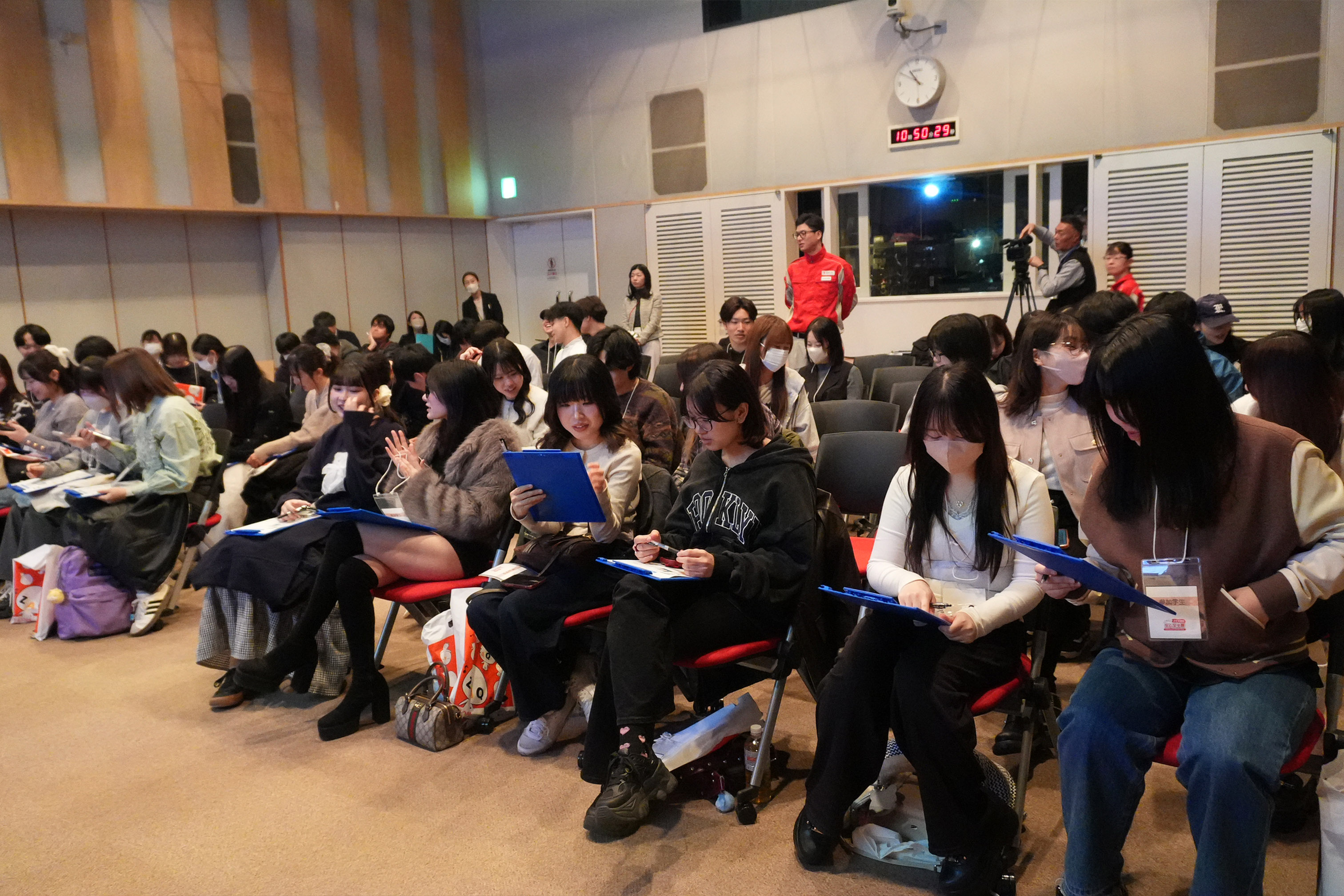
With the aim of raising awareness and changing behavior regarding disaster prevention, a disaster prevention seminar event for university students was held at the Nippon Cultural Broadcasting Media Plus Hall on February 24, 2026, with the cooperation of the Japanese Red Cross Society.
A high percentage of university students live alone, and in the event of a disaster, they will be required to make evacuation decisions on their own. We held a disaster prevention seminar event, hoping that by learning about disaster preparedness in advance, we could help them make decisions in an emergency. This seminar was held ahead of the new curriculum that the Japanese Red Cross Society will be fully implementing from April, and focused on evacuation behavior.
Part 1: Talk session (guest: Mayurika)
When the topic of conversation turned to "What would you like to put in your emergency bag and give to your partner?", Sakamoto revealed that she already had an emergency bag prepared at home. While Sakamoto said that she did it because "I have a family" and "I have something to protect," Nakatani recommended lip balm, something that Sakamoto often loses, as something she would like her partner to add to the bag. She also shared an episode full of love for her partner, where she said that when Sakamoto loses her lip balm, she sometimes borrows it from her partner Nakatani.
At the end of the talk session, Nakatani, who collects figurines, proposed that the "Evacuation Switch" would be the signal to activate the evacuation switch, which he had deliberately placed in an unstable position and which would then fall over all at once. He concluded by saying that since it is he himself who must be protected, he wanted to think of this as something that concerns him personally.
Both Mayurika members are from Kobe and experienced the Great Hanshin-Awaji Earthquake when they were children. It was an opportunity for them to update their memories of the time, of fear and confusion, to a mindset of "preparing" to protect themselves.
Part 2: Red Cross Disaster Prevention Seminar (Theme: Evacuation Switch)
During the seminar portion, participants first checked the "dangers at home and in the area" while checking hazard maps. They confirmed the situation in the area where they live. Afterwards, they exchanged opinions with other participants, making the issue personal, with one participant saying, "The river was closer than I thought, so even though I live on a high floor, I realized I needed to be careful." They also thoroughly understood the dangerous areas in their areas and the types of disasters that could be expected, and considered their "evacuation switch." Through various exercises, the participating students were given the opportunity to discover their own unique "evacuation switch."
Participant comments
・As Mayurika said, I think it's important to always have a disaster preparedness bag on hand.
-I currently live with my pet, and since it is a senior dog, I wanted to use today as an opportunity to think carefully about how we can evacuate together.
・I think it's a good idea to keep not only your smartphone but also your mobile battery fully charged.
-The lighting in my house is a hanging light, so I thought it would be dangerous if it shook, so I wanted to turn on the evacuation switch.
We will continue to work to ensure that disaster prevention is seen as something that concerns us personally.
Participating in the "ACTION! Disaster Prevention and Mitigation" Project
J:COM is participating in the project "ACTION! Disaster Prevention and Mitigation - Take Action Now for Your Life" organized by the Japanese Red Cross Society.
This project focuses on March, the month of the Great East Japan Earthquake, and aims to raise awareness of the future, promoting the importance of disaster preparedness, and creating a movement to raise disaster prevention awareness throughout Japan. For more information, click here
Conducting a survey on disaster preparedness awareness among young people
In collaboration with the Japanese Red Cross Society, we conducted a "Survey on Disaster Prevention Awareness Among Young People" targeting young people (1,032 individuals aged 18-24 residing nationwide).
Survey Overview
- Survey period:
- January 30th (Friday) – February 2nd (Monday), 2026
- Research method:
- Internet survey
- Survey subjects:
- People aged 18-24 living anywhere in Japan
To compare each area, the following eight areas were allocated accordingly.
Hokkaido / Tohoku / Kanto / Chubu / Kinki / Chugoku / Shikoku / Kyushu
- Number of respondents:
- 1,032 people
- Monitor provider:
- Macromill Monitor

《Survey Summary》
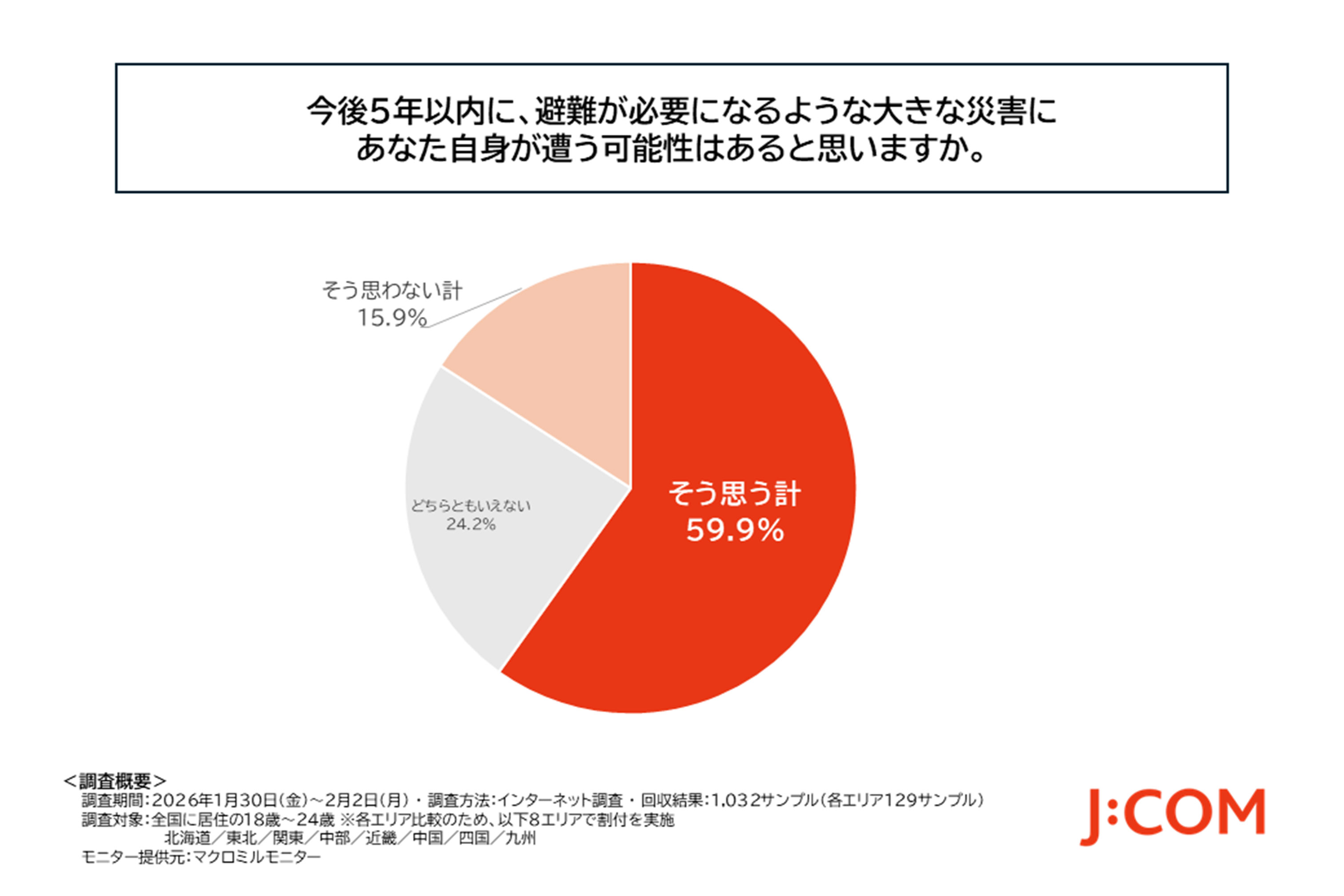
Approximately 60% of young people believe they may be affected by a major disaster requiring evacuation within the next five years.
Approximately 60% of young people believe they could experience a major disaster within the next five years. On the other hand, 15.9% responded that they did not think so.
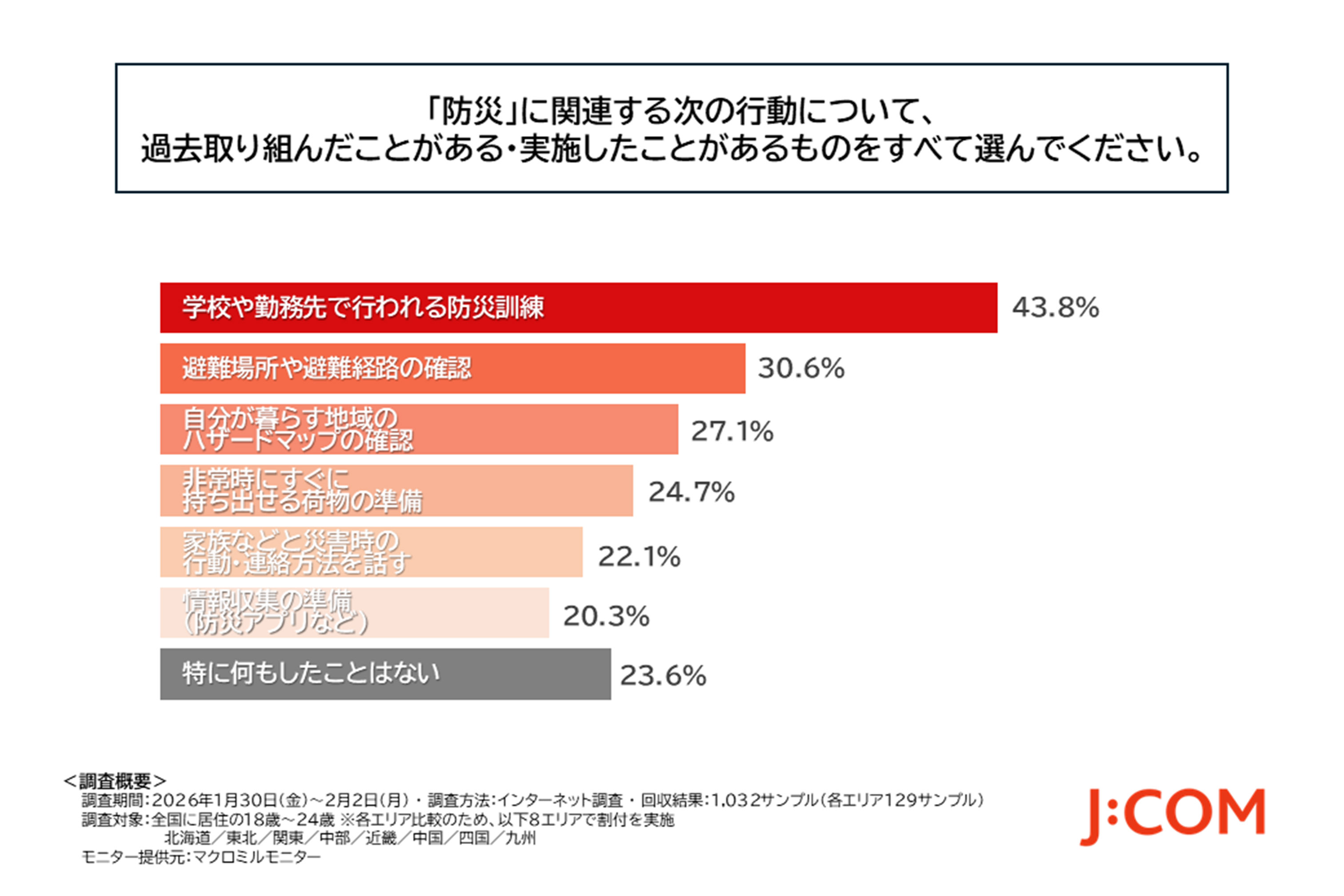
Regarding actions related to "disaster prevention," more than one in five young people responded that they "haven't done anything in particular."
23.6% of respondents answered that they "haven't done anything in particular" regarding disaster preparedness, suggesting that more than one in five people lack knowledge or preparation. The most common type of disaster preparedness action taken in the past was "disaster preparedness drills held at school or work," followed by "checking evacuation sites and routes" and "checking local hazard maps."
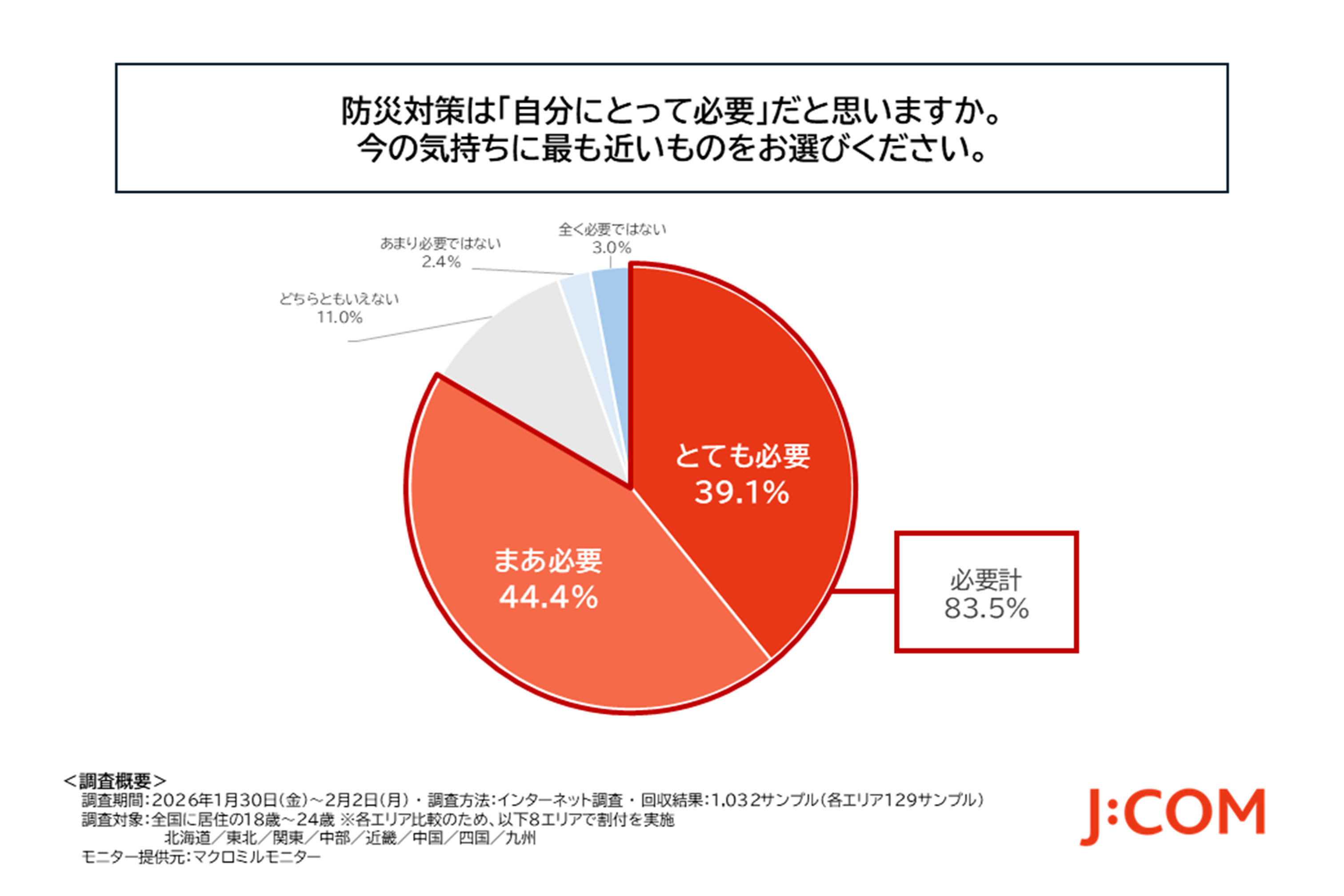
Over 80% of young people believe that disaster preparedness is "necessary for them."
Regarding whether disaster preparedness measures are necessary, 83% of respondents overall answered "yes." Among those who had previously taken some form of disaster preparedness action or had experienced a disaster, a higher percentage answered "very necessary." (See detailed version)
Furthermore, among those who had experienced a disaster, the most frequently cited helpful past disaster preparedness action was "disaster drills conducted at school or work." However, among the 63 individuals who had experienced particularly severe disasters, a higher percentage reported that "seminars and events they voluntarily participated in" were helpful compared to the overall average. (See detailed version)
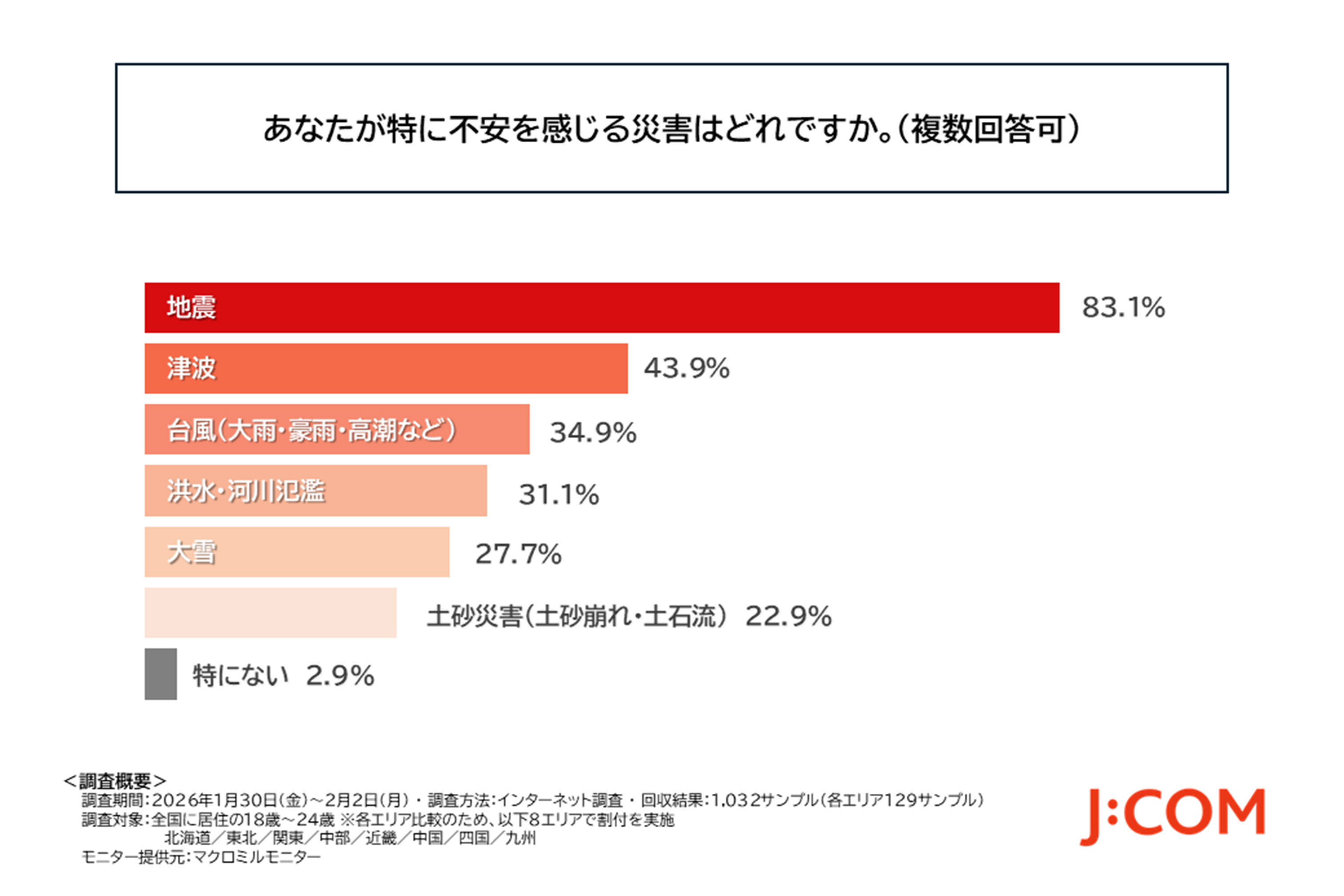
Over 80% of young people answered that "earthquakes" are the type of disaster that causes them the most anxiety.
Of the various types of disasters, earthquakes were the most feared, followed by tsunamis and typhoons. However, while typhoons came in third, the percentage of people who felt anxious about them was more than 10 percentage points lower than that of tsunamis.
Furthermore, the items that caused anxiety varied by region. In addition to the overall trends mentioned above, Hokkaido had a high percentage of "earthquakes" and "heavy snow," Tohoku had a high percentage of "heavy snow," Kanto had a high percentage of "floods/river overflows," "large-scale fires," and "volcanic eruptions," while Chugoku had a high percentage of "landslides," Shikoku had a high percentage of "tsunamis," and Kyushu had a high percentage of "typhoons." The Chubu region showed the same results as the overall trend, while the Kinki region showed a low percentage of people feeling anxious about "landslides."
Furthermore, regarding whether disaster prevention measures are necessary, the Tohoku area had a high percentage of people who answered "very necessary," revealing regional differences in how disaster risks are perceived and the level of disaster preparedness awareness. (See detailed version)
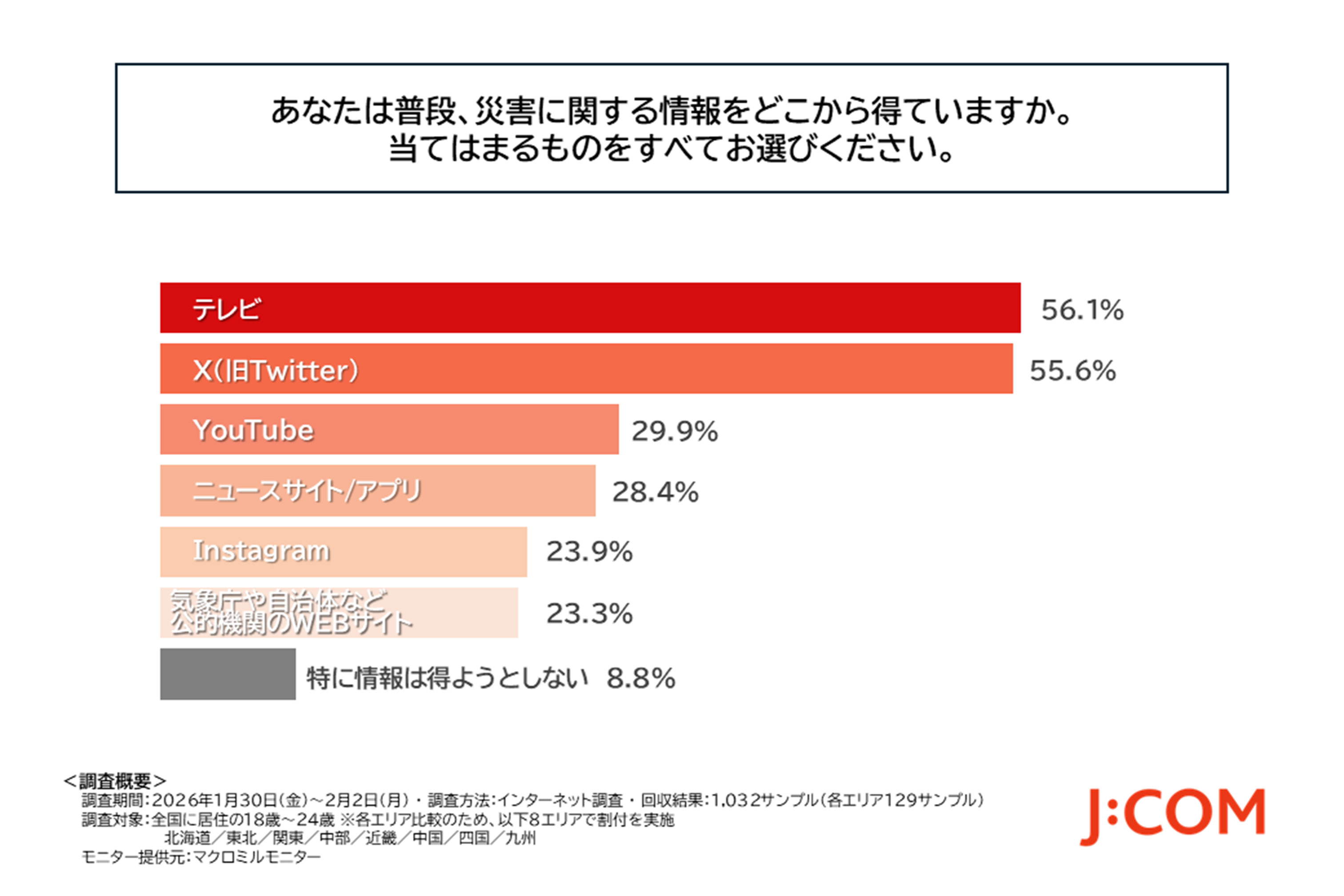
• When asked what young people use to get information about disasters, they answered: 1st place: television, 2nd place: X (a Japanese online forum).
Television was the most common means of obtaining information about disasters. Even among younger generations, who have access to smartphones and the internet, television is still considered a vital source of information during disasters, albeit by a small margin.
The next most popular method was "X (formerly Twitter)," at 55.6%, just 0.5 points behind the top-ranked television. This shows that young people are also gathering information through social media, especially X (formerly Twitter), which offers timely news.
In addition, we also considered factors such as whether or not they had experienced a disaster and whether or not they had taken specific disaster prevention actions in the past, and as a result of our analysis,
- Those who have never taken disaster preparedness measures in the past are more likely to answer that they "rarely/never think" about the possibility of being affected by a disaster.
- The percentage of people who perceive disaster preparedness as important differs depending on whether they have experienced a disaster or have taken specific disaster prevention actions in the past.
The following trends were also observed. (See detailed version)
■ Comment from the Japanese Red Cross Society
This survey revealed that people who have experienced a disaster or taken some kind of disaster prevention action tend to perceive disasters as something that directly affects them and think more concretely about preparation and evacuation. On the other hand, it was found that there is still a difference in specific preparations and actions between those with and without such experience. Although the need for disaster prevention is widely recognized among young people, it is also true that differences exist in awareness, knowledge, and actions.
These results demonstrate once again the importance of not only knowing about disaster prevention as knowledge, but also relating it to one's own life and translating it into concrete actions. The Japanese Red Cross Society will also strive to raise awareness of the importance of mutual support within the community, in addition to preparing to protect one's own life and the lives of one's family (self-help), through Red Cross disaster prevention seminars and other means.
This survey revealed that while young people are aware of their anxieties about disasters and the importance of disaster preparedness, they face challenges in making disaster preparedness a personal matter and putting it into concrete practice.
Based on these results, J:COM will continue to work with the Japanese Red Cross Society to disseminate information related to disaster prevention and mitigation, hold seminars and events, and engage in various activities to help people connect disaster prevention actions to their daily lives and provide opportunities to start taking action.